Web Hosting
Hosting environments for business websites, landing pages and web applications. Requirements are defined around the site’s software, expected traffic, storage and maintenance needs.
Web hosting, server environments and infrastructure operations, brought together with clear configuration, planned changes and defined responsibilities.
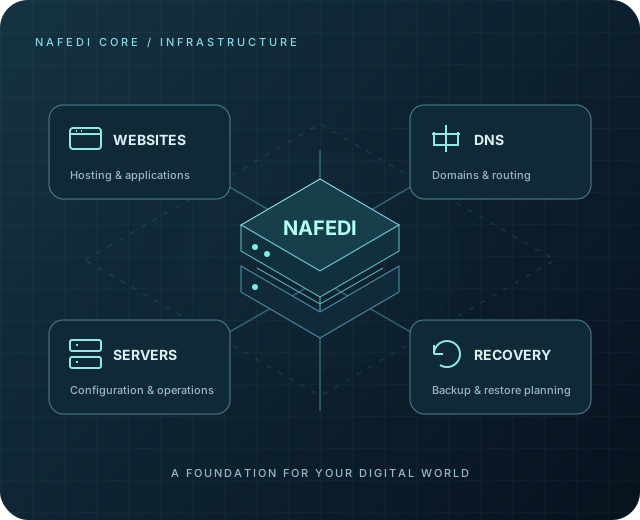
Start with a website or application requirement. Build an environment that can be understood, maintained and adapted as those requirements change.
Hosting environments for business websites, landing pages and web applications. Requirements are defined around the site’s software, expected traffic, storage and maintenance needs.
Linux server setup, virtual environments and application hosting configuration. Access, resource allocation and deployment requirements are agreed before implementation.
DNS zone configuration, website routing and email-related record changes. Domain ownership and registrar access remain with the customer unless otherwise agreed.
Move website files, databases and configuration through a planned migration. Review dependencies, prepare backups, test the target environment and agree the cutover.
Define backup scope, schedules, retention and restore procedures. Recovery objectives and any restore testing are scoped explicitly for the environment.
Agree update responsibilities, technical checks and incident handling. Monitoring coverage, maintenance windows, support hours and response targets are defined in the service agreement.
A suitable environment depends on software requirements, data, access and operational responsibilities. These details are defined before resources are provisioned or a migration begins.
Explore infrastructure scenarios ↗Share the workload and requirements to begin a focused infrastructure discussion.